Parent & Pro Picks
Explore tools and organizations that parents and medical professionals have found particularly helpful.
Search Parent & Pro Picks
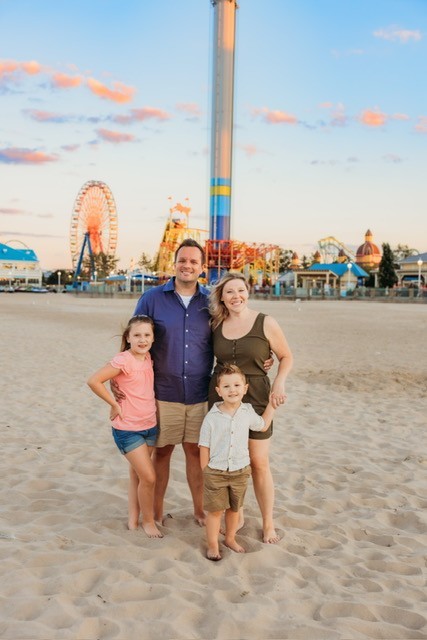
Through Isla’s Eyes: A Sibling Journey
In 2021, we welcomed our healthy baby boy into the world, bringing more love and joy to our family than we knew was humanly possible. Our family of three became a family of four, and Isla, five years old at the time, beautifully transitioned into her role as a big sister.
Her little world was already changing as she started kindergarten, and like any mom, I spent a significant amount of time wondering what our new family dynamic would look like.
Our hearts were so full, and any worries we had quickly faded as we settled into our new normal. I realized we had given our children the greatest gift - each other.
When Everything Changed
That sense of normalcy shifted again when Finn was hospitalized later that year. At just six months old, he was diagnosed with Infantile Spasms, a rare and critical seizure disorder. Within 24 hours, our family was thrust into emergency care, long drives in and out of the city, and an uncertain future.
While Finn became the center of urgent medical attention, another story unfolded quietly alongside his, the experience of his big sister, Isla.
In the middle of fear, hospital stays, and constant transitions, Isla’s world changed again. She has always been a child who thrives on routine and feels deeply, and at an age when routine means everything, hers disappeared overnight.
A New Normal for Isla
Billy and I were stretched thin, trading shifts between home and hospital, scrambling for childcare, and trying to be present for both of our children while barely holding things together. Like many siblings in these situations, Isla could feel the stress, even if she didn’t fully understand it.
Our attempt to be everywhere at once, while feeling like we were never quite succeeding, is something Isla felt deeply. It’s something siblings often absorb in ways adults don’t always see.
At the time, COVID protocols meant Isla wasn’t permitted in the hospital, adding yet another challenge to our already fragile balance. Not only was she experiencing the loss of her routine, but she was also missing her family and worrying about her baby brother and best friend.
Finding a Place for Our Family
Following the advice of a close friend and our social worker, we reached out to the Cleveland Ronald McDonald House to see if there was a place for us.
Everything shifted when we found support there, a place we would call home for the next week. The greatest blessing was that we could bring Isla with us.
For Isla, the Ronald McDonald House didn’t feel like an extension of the hospital. It felt like something entirely different. To this day, she remembers it as an adventure. The House felt like a hotel to her, and she often said it felt like a vacation.
We could be present at Finn’s bedside, then walk across the street to be with Isla, sharing meals, playing, resting, and decompressing so we could return to Finn refreshed.
A Place to Just Be a Kid
She picked out breakfast and snacks each morning. She met therapy dogs. She played with books, dolls, and art supplies and explored the fenced-in outside playground and garden.
She laughed, explored, and had the space to simply be a kid. Most importantly, she was with her family.
That contrast, between the seriousness of Finn’s condition and Isla’s experience of warmth, play, and routine, speaks to something essential about siblings in medical crises.
Children don’t process hardship the same way adults do. What they need isn’t just information...it’s stability, comfort, and moments that still feel like childhood.
At the House, Isla found exactly that while remaining close to us.
Siblings Need to Feel Seen and Included
For siblings, being included, physically and emotionally, can make all the difference. As we witnessed, separation often adds to confusion and fear. Being together, even in difficult circumstances, creates a sense of security that words alone can’t provide.
Siblings like Isla often carry invisible emotional weight. We knew from an early age that Isla feels deeply, and during Finn’s journey, we noticed a new sense of anxiety emerge.
Kids sense when something is wrong. They adapt quickly. And sometimes, they quietly set aside their own needs in response to what their family is going through.
When given the right environment, one that prioritizes both care and normalcy, they can remain what they are meant to be: kids.
Making Space for Isla’s Feelings
One of the most valuable resources for us was the Child Life department support provided through the hospital, along with children’s psychiatry services. Providers regularly checked in on Isla, how she was coping and what support we might need. Our social worker was instrumental in connecting us with these resources.
Shortly after Finn’s diagnosis, we began outpatient therapy for Isla with a provider who understood our family’s story. This gave her a dedicated space to process her thoughts, feelings, worries, fears, and questions.
We made it a priority to support her social and emotional needs just as much as Finn’s and our own. We gave her space to ask questions, to feel heard, and to simply be a child.
Coming Home Together
I remember the day Finn was discharged home. It was a day filled with snuggles, giggles, and more hugs than we could count.
Watching our children reunite is a moment I will carry with me forever.
Our journey didn’t end there. The following year brought frequent follow-up visits, physical and occupational therapy, a strict medication regimen, and limited exposure to others due to Finn’s fragile immunocompromised state.
Through it all, we remained intentional about supporting Isla.
We gave her age-appropriate roles in Finn’s care, carved out one-on-one time with her, continued her therapy, and worked to maintain as much normalcy in her routine as possible.
Looking Back Through Isla’s Eyes
Today, Finn is four, thriving, happy, strong, and preparing to start pre-K. We are beyond grateful for his positive prognosis.
Isla is now nine. She's full of life, brilliant, and deeply resilient.
She remembers much of that time, but what stands out most to her are the positive memories: our stay at the Ronald McDonald House and the support of the care team who carried us through.
We’ve made it a point to keep conversations open, allowing both of our children to ask questions and share their feelings about our journey.
What We Learned as a Family
My biggest advice to any family navigating a medical journey with multiple children is this: ask for help and accept it.
The support you need is out there, and it can make all the difference, not just for the child receiving care, but for the siblings walking alongside them.
Isla’s journey reminds us that even in the hardest moments, children are capable of incredible resilience when they feel safe, seen, and included.
While Finn’s diagnosis changed our family forever, it also showed us the strength that exists within each of us, especially in the quiet, often unseen experiences of siblings.
Through Isla’s eyes, we learned that healing isn’t just about medicine or milestones. It’s also about connection, presence, and preserving the simple moments of childhood, even in the middle of uncertainty.
More from the Ronald McDonald House Resource Link:
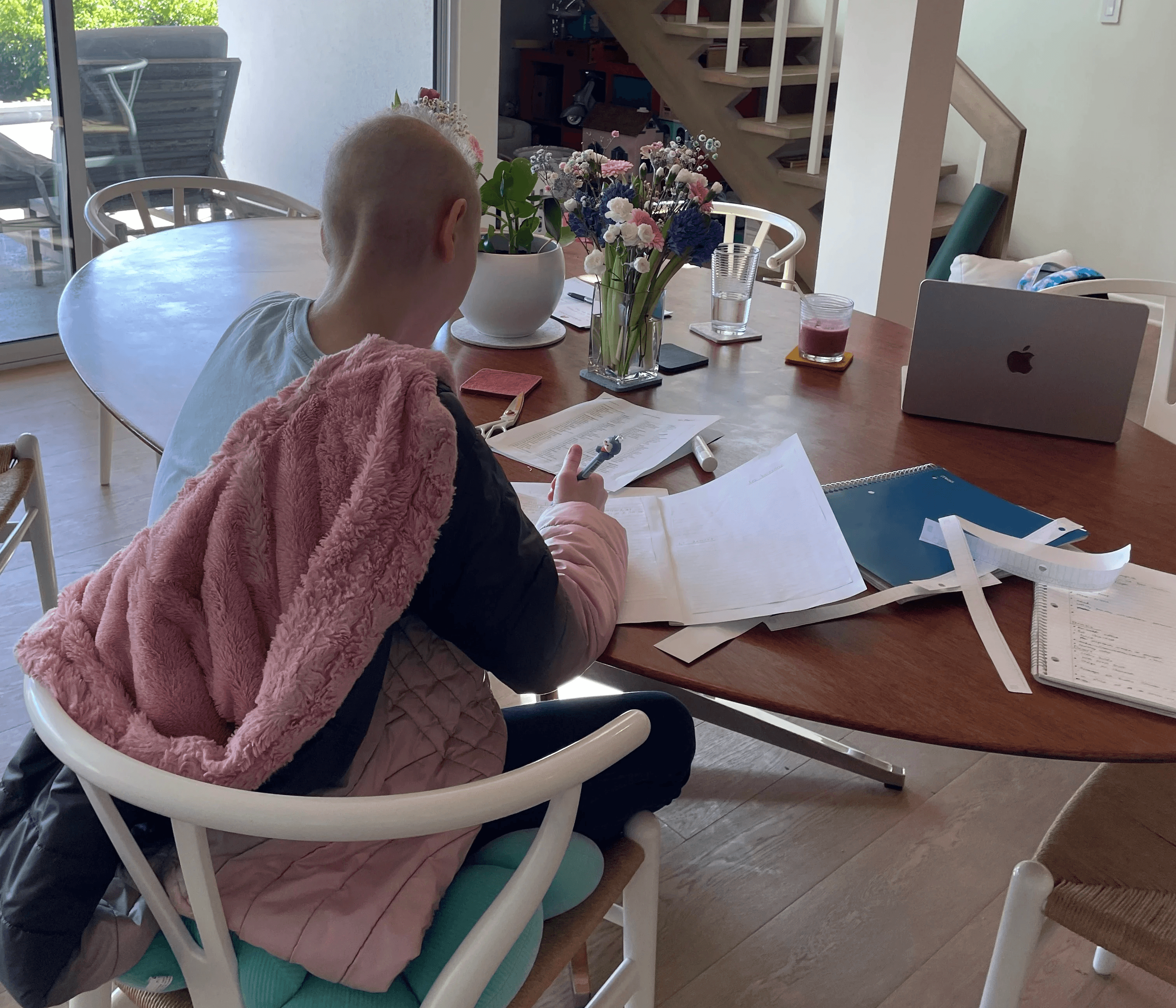
Learning, Connection, and Hope: The Pediatric Hope Project
From Experience to Action
Through my experience with stage four neuroblastoma, I noticed that education was a challenge that many families were facing. Between hospital stays, appointments, fatigue, and the emotional toll of illness, keeping up in school could feel impossible. I also saw how much siblings were affected. This eventually motivated me to create the Pediatric Hope Project.
The Pediatric Hope Project is a nonprofit organization that provides free one-on-one tutoring and mentorship for children with cancer and other serious illnesses, as well as their siblings. We match families with volunteer tutors from mostly college and graduate programs based on each student's needs. Our tutoring sessions are virtual, which allows us to support students wherever they are, whether at home, in the hospital, or recovering between treatments.
More Than Academic Support
While academic support is a big part of what we do, our mission goes beyond that. We want students to feel supported and connected during a time when life feels uncertain. Tutors can become a familiar face each week, offering encouragement and companionship.
For parents, educational support can make a meaningful difference, as families dealing with complex medical conditions are already balancing countless responsibilities and worries. By providing free tutoring, we hope to lighten their load and give families one less thing to worry about.
Building Confidence and Connection
One of the most rewarding parts of this work has been seeing the relationships that develop between tutors and students. Many children look forward to their sessions not only because they are learning, but because they have someone to talk to about books, hobbies, goals, and everyday life. For siblings, tutoring can also be a reminder that they matter and deserve support, too.
One parent shared, “Tutoring has helped my son by giving him the structure he needs to stay on track, especially with everything he’s juggling medically. It has boosted his confidence by helping him feel capable and caught up, and it has improved his attention because the sessions are paced in a way that keeps him engaged without overwhelming him.”
Another family shared, “One of the most meaningful aspects of the program for our child has been the opportunity to connect and communicate with someone outside of our household. She always looked forward to Fridays and is genuinely excited to meet with her tutor, talk, and share about anything under the sun. Those interactions became very special to her.”
A Hope for Every Family
My hope for the Pediatric Hope Project is simple: that every family facing pediatric illness has access to educational support. No child should have to fall behind because they are focused on getting better, no sibling should feel overlooked, and no parent should have to navigate these challenges alone.
Through the Pediatric Hope Project, we're working to provide that kind of support by helping children and families find confidence, connection, and hope, even during some of life's hardest moments. Every one of our tutoring matches represents a courageous child continuing to learn despite difficult circumstances and a generous volunteer choosing to invest their time and care in someone else's journey.
More from the Ronald McDonald House Resource Link:

More Than Sauce, Noodles, and Cheese: How Lasagna Love Supports Families Through Simple Acts of Kindness
When a child has a serious illness, everyday life can quickly become overwhelming. Between hospital stays, treatments, appointments, work, and caring for the rest of the family, even simple tasks like preparing dinner can feel impossible.
That’s Where Lasagna Love Steps In
Lasagna Love is a global nonprofit movement powered by volunteers who provide homemade lasagna to neighbors in need with no questions asked, no qualifications required, and no judgment attached. We strive to normalize asking for help. What began as one Facebook post during the pandemic has grown into a grassroots movement serving families across the United States, Canada, Australia, and the U.K.
At its heart, Lasagna Love is about more than food. It exists to feed families, spread kindness, and strengthen communities by showing up for neighbors during difficult times.
As the mom of a daughter who faced a life-threatening illness, I know firsthand how overwhelming life can become when your child is sick. That experience is one of the reasons Lasagna Love's mission means so much to me.
Quite simply, Lasagna Love reminds families they are seen, supported, and not alone.
Supporting Families Beyond the Hospital
Families connected to Ronald McDonald House programs often experience unique challenges after a hospital stay including:
Balancing hospital visits and caregiving
Traveling back and forth for continued treatment
Managing financial pressure
Coping with emotional exhaustion
Caring for siblings while supporting a sick child
The challenges don't end when you come home. They continue throughout the treatment journey. Appointments, medications, exhaustion, financial strain, uncertainty, and emotional weight don't disappear once you walk out of the hospital doors. Even something as simple as deciding what to make for dinner can feel impossible when your focus is on keeping your child safe and cared for.
During that journey, acts of kindness that may seem small to others can feel enormous to a family walking through crisis. A homemade lasagna is more than food. It’s relief, comfort, support, and a reminder that you are not carrying everything alone.
While volunteer availability varies by community, Lasagna Love works to lighten the burden for families during difficult seasons of life.
How Lasagna Love Works
Families can request homemade lasagna through the Lasagna Love website and are matched with a local volunteer chef when one is available. Volunteers prepare and deliver the lasagna directly to families completely free of charge.
For families navigating medical uncertainty, caregiving responsibilities, or emotional exhaustion, receiving a lasagna can provide relief from one more decision, financial breathing room, comfort during stressful times, and a reminder that their community cares.
A Mission Rooted in Kindness
Lasagna Love operates on a simple belief: small acts of kindness can create meaningful human connection. Every lasagna delivered represents a neighbor helping another neighbor, not because they have to, but because kindness matters. In communities across the globe, volunteers show up every day to support complete strangers with compassion, generosity, and care.
If your family could use one less thing to worry about, or if you'd like to support another family in your community, visit Lasagna Love to request a meal, volunteer, or learn more about the organization's mission.
Because sometimes the most powerful support starts with something as simple as lasagna.
More from the Ronald McDonald House Resource Link:

What I Can't Fix: A Father's Perspective
I'm a fixer by trade, both personally and professionally. At work, I design and build furniture. At home, I'm the husband who fixes the lawnmower, the dryer, and the water heater. Most days, the list never ends.
Since having my daughter, Olive, I've learned how to fix wheelchairs, standers, and lifts. I've built ramps, designed an accessible changing table for her room, and modified her bed.
Dad fixes stuff.
But the harsh reality is that there are some things, many things, I can't fix.
I can't fix brain damage.
I can't fix Dystonia.
I can't fix Cerebral Palsy.
I can't fix how a large part of our society views and treats disabled children like Olive.
I can't fix broken healthcare and education systems.
I can't fix the fact that my wife and I rarely get a break from 24-hour caregiving at the same time.
I can't fix how inaccessible much of the world still is.
I can't fix how expensive everything Olive needs is.
I can't fix the fact that some people simply don't, or won't, get it.
As a dad, that's a hard pill to swallow.
The hard part about raising a medically complex child honestly doesn't have much to do with Olive. It took me a long time to come to that realization. Olive is easy. Olive doesn't need fixing. She is perfect. She's a really cool kid with a wicked sense of humor, and she makes me proud every single day.
What's hard is everything that comes with having a disabled child. Most days, we're like any other family. Then something happens, or something is said, that knocks the wind out of you. Recently, it was the delivery of adult-sized diapers. Olive has outgrown the cute pediatric ones. There is no in-between. Holding up a diaper designed to fit a grown adult is like a slap across the face. It reminds you of expectations you once had and the countless adjustments, concessions, and recalibrations you've made along the way, because that's what dads do.
Balancing love and joy with cyclical grief for twelve years running is like walking a tightrope that is actively on fire. Everyone else is admiring the act while I'm focused on keeping my balance and moving forward, fully aware of how high the stakes always are. Things can change on a dime.
I love everything about my daughter, and I will continue fixing every single thing I can for her. I just wish so much of the world around my daughter wasn't so broken. Because the truth is, Olive was never the thing that needed fixing.
The Courageous Parents Network (CPN) seeks to provide parents of medically complex children the courage and confidence to function, thrive and grow, knowing that they are not alone.