Tiny Humans, Big Emotions: Building an Emotional Toolkit
Everyone experiences big emotions, including children. With the right tools, kids can be better equipped to manage life’s emotional highs and lows. As caregivers, we can assist children in identifying their emotions, understanding them, and building healthy coping skills. The resources in this guide can be a great start to help a child build an emotional toolkit for dealing with even the most challenging circumstances.
Using books to facilitate tough conversations
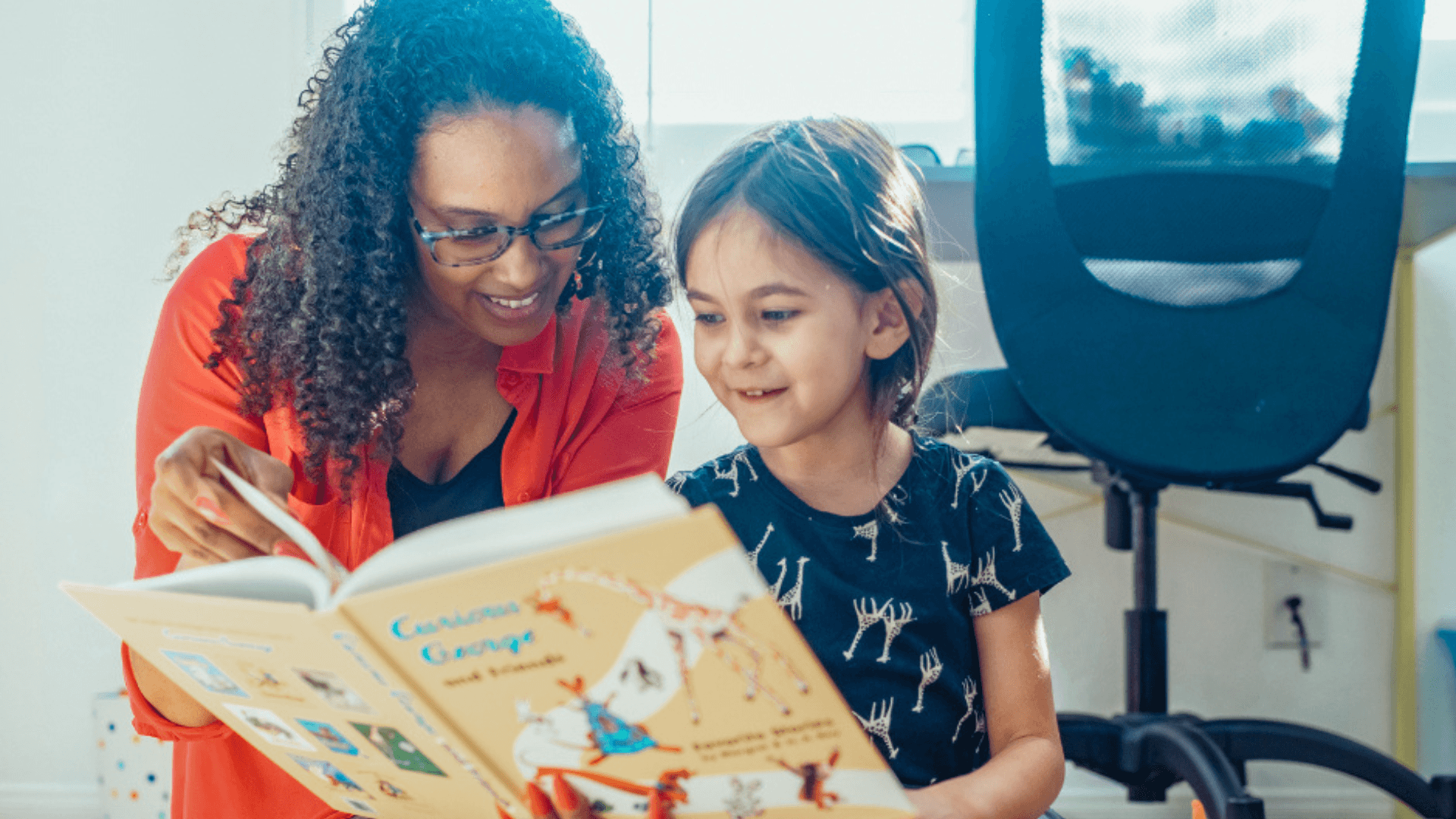
Reading a book with your child presents an opportunity to spend quality time with them in a calm environment, reflecting on daily life. Children’s books can also be great tools for introducing new experiences. For example, reading a short story about going to the dentist or hearing about a beloved television character’s trip to a see a doctor can help your kiddo understand what those experiences will entail. This preparation can help reduce the big emotions that can come along with doing something new and scary.
“Books can act as an icebreaker. Instead of sitting across from your child in a confrontational way, you’re sitting close to them. The story they hear can help the child identify with a character. It can gives them a chance to feel safe and start talking about their own issues.”
— Trace Moroney, Bestselling Author & Illustrator
The Child Mind Institute has gathered a list of 77 books with stories to help children who have experienced trauma, bullying, abuse, loss, and more. The list includes books for children up to age 12, that have been selected by clinicians with experience in counseling and mentoring youth. Reading a book that relates directly to their lived experience can help kids name and understand their own feelings.
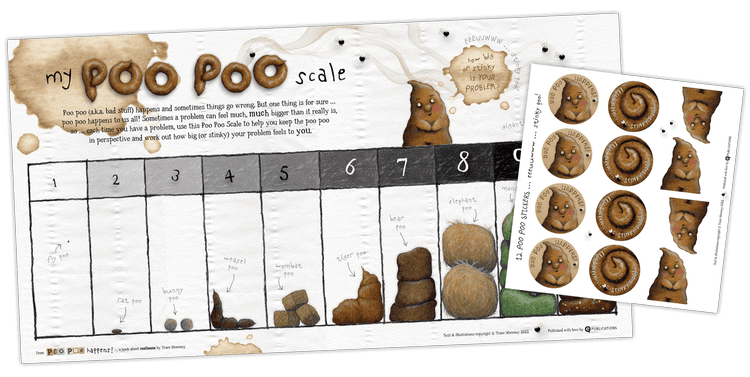
For a more general read that can help children deal with a variety of emotional situations, pick-up Poo-Poo Happens, a book about resilience by bestselling author and illustrator Trace Moroney. This book describes what it means to be resilient and offers well-researched techniques to help children face challenging events with greater confidence.
The book includes a ‘poo poo scale’ to help evaluate the intensity of each problem a person may face (whether a fly-poop problem, or an elephant-poop problem). The book and chart together help translate complex subjects into a language that children can understand.
Identifying and understanding emotions
Anyone with a child understands that tantrums and frustration are a part of raising a little one. Identifying emotions by name is the first step of many to help you and your child understand what they are feeling and why.
This article, from the Australian Parenting Network, offers tips to help children identify and name their emotions beginning from a young age, and manage their emotions as they move into their teen years.
This set of resources from Ronald McDonald Resource Link can help you and your child contextualize big feelings they may be feeling. This tool is designed to be reusable anytime a child needs help identifying their feelings.
This article from PBS Kids provides action steps you can take right now to make voicing emotional needs a part of your daily-family life.
In this video from Mental Health Center Kids, you’ll learn about four types of coping skills that you can help children add to their emotional toolbox.
Validating a child’s feelings
Validating emotions means acknowledging how a child feels, rather than focusing how on how you feel they should act in a particular situation. This validation teaches them that acknowledging and expressing their feelings is OK!
This article from Psych Central offers tips and a list of validating statements that you can use when your child is expressing big emotions.
This video from Gigglezilla Kids can help you reframe the language you use with children in just under two minutes of tips.
Emotional Wellness for Adults
Being a parent or caregiver can be overwhelming and exhausting. As you work to build your child’s emotional toolkit, make sure you are building your own as well. In the interest of self-improvement and in pursuit of lifelong learning, ask yourself if any of the tips and resources shared here could help improve your own emotional wellness.

Written By: Ashlie Discenza, RMHC NEO Marketing & Communications Coordinator.